15 Minutes from Haneda Airport! Kamata Onsen and Kuroyu (Black Water) Sento Bath Tour
Just 15 minutes from Haneda Airport, Kamata is a conveniently accessible spot for experiencing onsen (hot springs). The Kuroyu, or “black water” hot springs, are especially perfect for relieving travel fatigue. Here, we will introduce the charms of Kamata’s sento (public bathhouses) and Kuroyu.
Access from Haneda Airport
Kamata is easily accessible by train or bus from Haneda Airport.
Access by Train
The Keikyu Line is the fastest option, taking about 10 minutes. The Keikyu Airport Line splits toward Shinagawa and Yokohama after Keikyu Kamata Station, but trains bound for either direction stop at Keikyu Kamata Station. Note that Airport Limited Express trains do not stop there.
- Travel time from Haneda Airport Terminal 1/Terminal 2 (Keikyu) to Keikyu Kamata: Approximately 11 minutes
- Last train from Keikyu Kamata Station: In the 11 PM hour
Access by Bus
Route buses to Kamata Station operate from each terminal at Haneda Airport.
- Main bus routes: Kama 31 (via Hinode-dori), Kama 41 (via Haginaka), Kama 95 (shuttle bus)
- Kama 95: Shuttle bus stopping at each terminal of Haneda Airport, Kamata Station, and Otorii
- Fare: 300 yen for adults, 150 yen for children (IC card or cash) from Haneda Airport to Kamata Station
- Bus stops: Terminal 1, stop 16; Terminal 2, stop 17
- Late-night/early-morning buses: Buses to Kamata Station available
Other
JR Kamata Station and Keikyu Kamata Station are approximately 800 meters apart. If you need to transfer, the route through the arcade is recommended. Airport shuttle services such as NearMe are also available. Keihin Kyuko Bus (Haneda Keikyu Bus) operates the Kamata/Airport Shuttle Bus.
What is Kuroyu?
Kuroyu, which can be enjoyed at Kamata’s sento, is a unique hot spring found in Ota Ward. Let’s explore its historical background, characteristics, and cultural significance.
Historical Background of Kuroyu
Kuroyu began to be used in Kamata around the early Showa period. The reason Kuroyu springs in this area is due to geological factors. Ancient plant-derived organic matter (humic acid) has accumulated in the strata over many years and dissolves into the hot spring water, forming Kuroyu.
Characteristics of Kuroyu
Kuroyu is typically a sodium bicarbonate/chloride spring. It contains a large amount of organic matter such as humic acid, giving it a black-brown color. The transparency is low, only a few centimeters. The spring temperature is around 18°C (cold mineral spring), but it is heated for bathing. Kuroyu is also known as “bijin no yu” (hot spring for beauty) because it leaves the skin smooth. The difference from other hot springs lies in its unique color and composition. Compared to transparent hot springs, Kuroyu is rich in organic matter such as humic acid. Ota Ward has the largest number of Kuroyu sento in the 23 wards of Tokyo.
Cultural Significance of Kuroyu
Sento are important places for local residents to relieve daily fatigue and deepen relationships. In Ota Ward, initiatives such as the “Ota BLACK Campaign” and “Kuroyu Day” (September 26) are used to promote the appeal of Kuroyu. These activities also contribute to the promotion of local culture.
Recommended Sento in Kamata
Kamata has many sento where you can enjoy Kuroyu. Here are some recommended sento.
Kamata Onsen
Established in 1937, this long-established sento boasts some of the richest Kuroyu in Kamata. The hot bath is famous, and there is also a banquet hall and dining area.
- Opening hours: 10:00 AM - 12:00 AM
- Closed: Open all year round
- Admission: Adults 550 yen, middle school students 200 yen, children 100 yen
- Sauna: 300 yen
- Address: 2-23-2 Kamata Honcho, Ota-ku, Tokyo
- Official website: Kamata Onsen
Kuroyu no Onsen Yu-City Kamata
This onsen sento is located near Kamata Station and is easily accessible. You can enjoy various types of baths such as a jacuzzi, vibrating bath, electric bath, sauna, and cold water bath. The “YCK Hall” is attached, where you can enjoy meals, karaoke, and live performances.
- Opening hours: 11:00 AM - 12:00 AM
- Closed: Irregular holidays
- Admission: 550 yen and up
- Address: 1-26-16 Kamata, Ota-ku, Tokyo
- Official website: Yu-City Kamata
Hasunuma Onsen
Established in 1944, this sento was renovated in 2017 and has a retro-modern atmosphere. You can enjoy a carbonated bath and sauna.
- Opening hours: 3:00 PM - 12:00 AM
- Closed: Tuesdays
- Admission: Adults 550 yen, junior high school students 450 yen, elementary school students 200 yen, pre-school children 100 yen
- Sauna: 300 yen
- Address: 6-16-11 Nishi-Kamata, Ota-ku, Tokyo
- Access: About a 2-minute walk from Hasunuma Station on the Tokyu Ikegami Line
Kaiseiyu
This long-established sento was founded in 1929. It features a “Kuroyu Carbonated Spring” in which carbon dioxide gas is dissolved in Kuroyu, and a “Silk Bath” in which fine bubbles envelop the entire body. The facility is barrier-free.
- Opening hours: 3:00 PM - 12:30 AM
- Closed: Fridays
Daishoyu
Located in a residential area near Keikyu Kamata Station, this sento was founded in 1934 and has a long history. The water is heated with firewood.
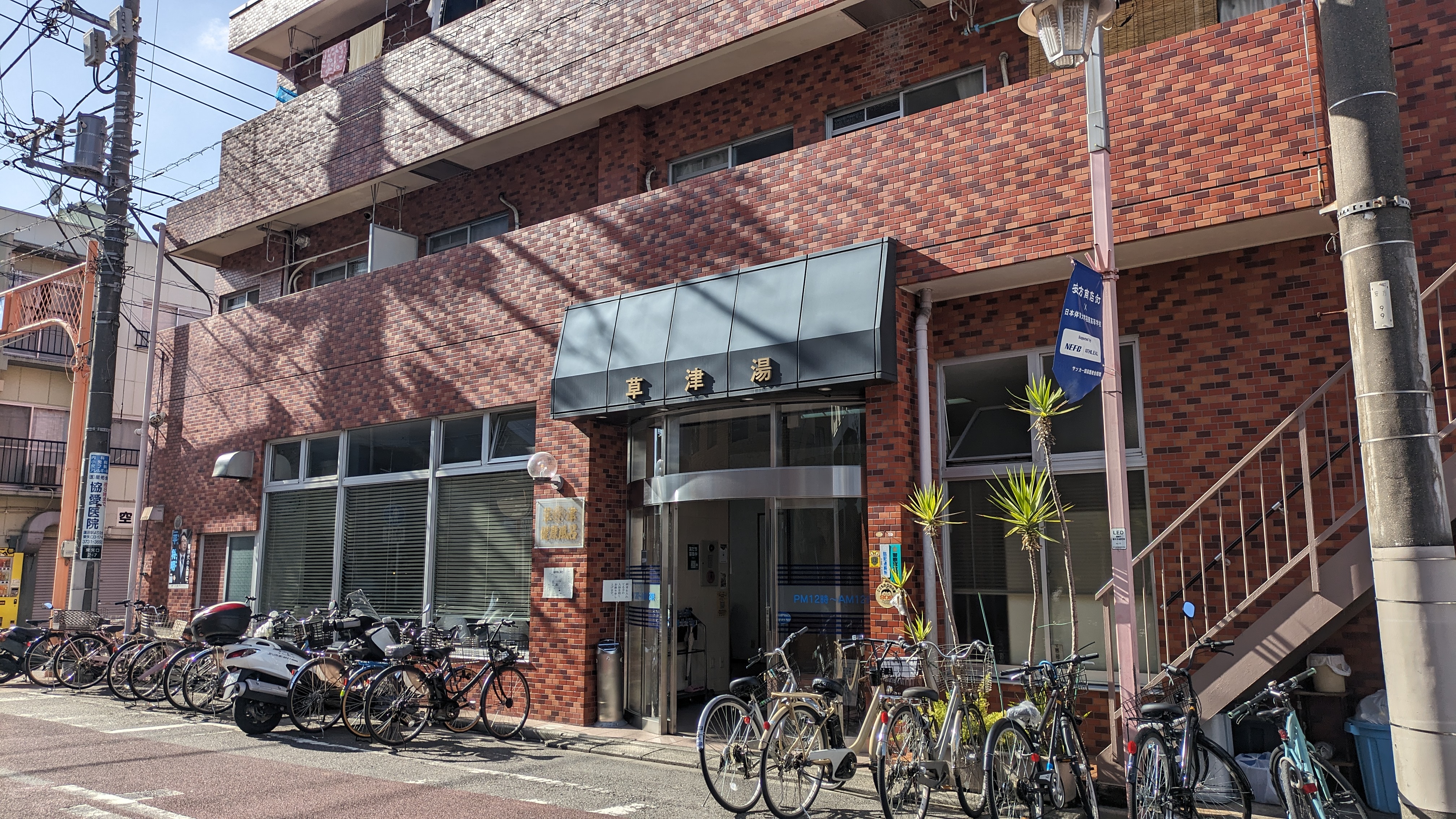
Yaguchi no Watashi Kusatsu Yu
This sento is located about a 3-minute walk from Yaguchinowatashi Station on the Tokyu Tamagawa Line. You can enjoy 9 types of baths, including a free sauna with TV, a jet bath, an electric bath, and a mineral spring bath. The well-chilled cold water bath is also popular.
- Opening hours: 12:00 PM - 12:00 AM
- Closed: Irregular holidays
- Admission: Adults 550 yen, middle school students 200 yen, children 100 yen
- Other: Bath towel rental 50 yen, bath set 100 yen
- Address: 2-7-21 Higashi-Yaguchi, Ota-ku, Tokyo
- Access: About a 3-minute walk from Yaguchinowatashi Station on the Tokyu Tamagawa Line
- Official website: Kusatsu Yu (Tokyo Public Bathhouse Association)
For Foreign Visitors
Japanese sento are valuable places where you can experience Japanese culture. Here is some basic information and etiquette to help foreign visitors enjoy sento with peace of mind.
Use of Pictograms
There are attempts to display bathing manners with pictograms so that they are easy for foreigners to understand. ISO has established pictograms for hot springs, and many sento provide visually easy-to-understand guidance.
The following pictograms are used in sento:
- Wash your body before entering the bath: A figure of a person sitting and washing their body at the washing area
- Do not put towels in the bathtub: A figure of a person holding a towel with an X mark
- Tie your hair: A figure of a person tying long hair
- Wipe your body before leaving the bathroom: A figure of a person wiping their body with a towel
These pictograms are designed to allow you to intuitively understand manners even if you do not understand the language.
Multilingual Support
There are also Ota Ward’s YouTube videos “How to enter a sento for foreigners” (Japanese, English, Chinese, Korean) and sento with multilingual ticket vending machines and in-facility guidance. Pointing conversation tools are also useful.
- Ota Ward Official YouTube Video: How to enter a sento for foreigners (Japanese version)
- Chinese version: How to enter a sento for foreigners (Simplified Chinese version)
Basic Manners
- Wash your body before entering the bath
- Do not put towels in the bathtub
- Wipe your body before leaving the bathroom
Useful Resources
- Ota Ward Official YouTube Videos:
- Pamphlets from the Tokyo Public Bathhouse Association:
- “Discover ‘Real Japan’ SENTO” pamphlet (multilingual support)
- WELCOME! SENTO Campaign: https://welcome-sento.com/
- Tokyo Sento Guidebook: https://www.1010.or.jp/ (Tokyo Public Bathhouse Association Official Website)
Kamata Sento Map
Many sento are scattered throughout the Kamata area. Find the nearest sento on the map below.